We have moved this blog to a host that doesn’t put advertising on the pages. Our new home is at: https://birdswords.peregrines.net
Come visit us there!

We have moved this blog to a host that doesn’t put advertising on the pages. Our new home is at: https://birdswords.peregrines.net
Come visit us there!
Posted in Uncategorized
When we told our friends in Chennai we wanted to do some sightseeing, they all said, “Go West–to Kerala!”
“Never heard of it,” we said.
“It’s beautiful,” they replied.
While we were mulling over this possibility, we met a fellow hotel guest who happened to be from Kerala. I told Sandhya we were thinking of visiting Kerala, and she turned travel agent on the spot.
“You must go. It’s like nothing else you’ll see in India. First you should go to Munnar, spend two nights, then to Thekkady, take a boat ride and stay a night in the tiger preserve, then Marari Kollam, and then a night on a houseboat.” Continue reading
Posted in India, Kerala, South Asia, South India, spices, Travel, Uncategorized
Tagged chocolate, coffee, food, India, Kerala, organic, South Asia, South India, Travel
Note: Please look two posts down for Stop 2. I’m not sure why it isn’t appearing here.
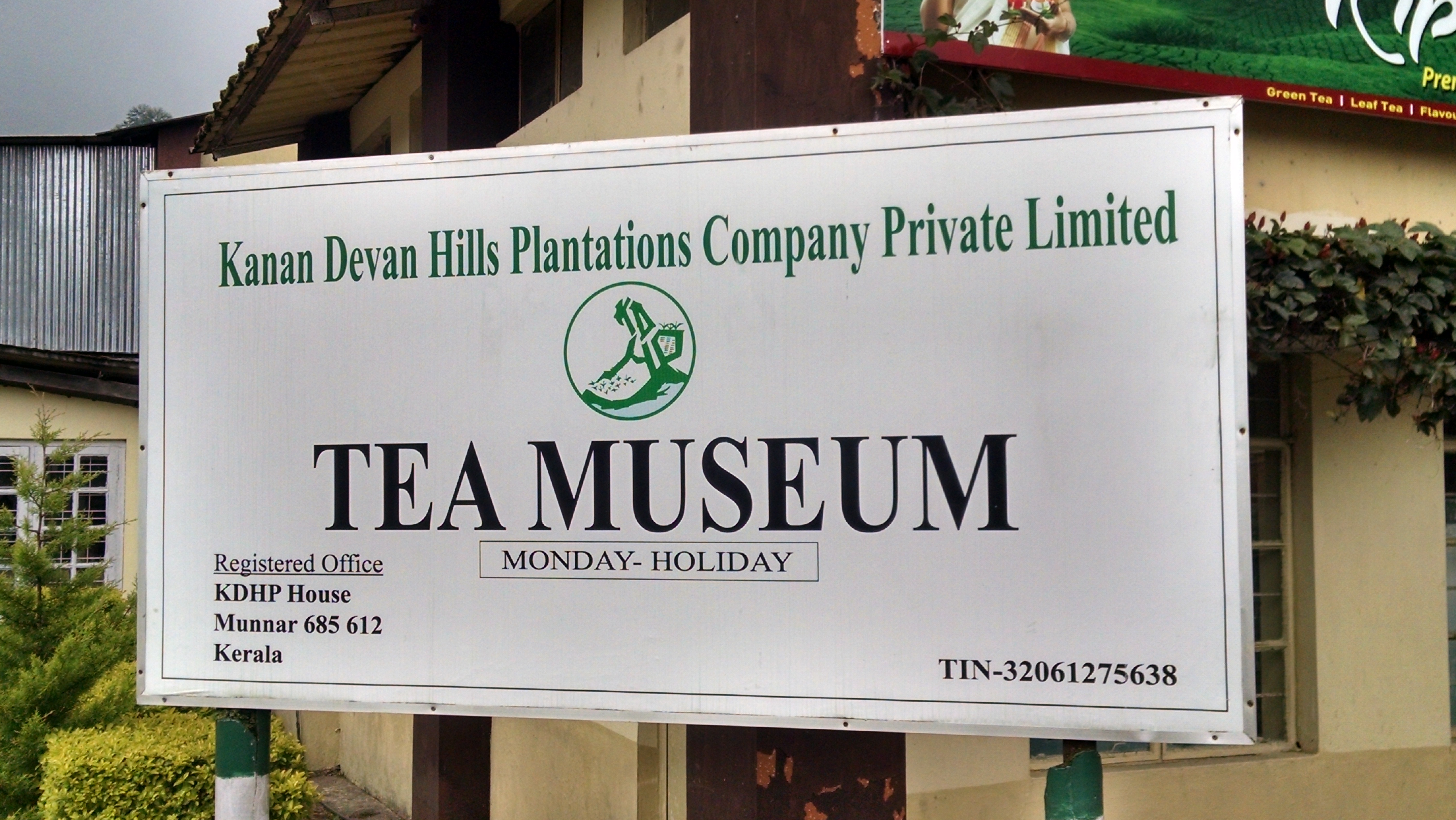
Following our walk through the tea fields (See A Week in God’s Own Country, Stop 2), and while Brian was hard at work grading assessments, Brianna and I went to the KDHP Tea Museum to see what happens to tea after it leaves the fields (no pun intended).
Posted in Uncategorized
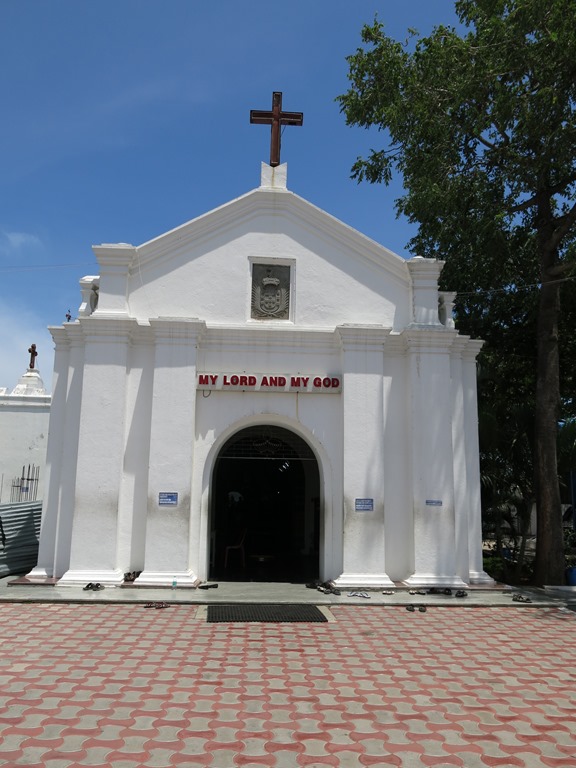
St. Thomas Mount, situated near the Chennai airport, is the closest historical site to the Radisson Blu Hotel, where we spent the first five weeks of our stay in India. Having visited sites all over the city, it seemed obligatory to tour the Mount before moving to our apartment an hour away.
Accordingly, Brianna and I booked a cab and set off for the hill which is said to be the place where the Apostle Thomas often spent time in prayer and where he was martyred. We shortly turned off the busy six-lane street that runs past the hotel and into the tree-lined winding lanes of the army cantonment first established by the British.
Posted in adoption, Chennai, history, South India, St. Thomas Mount, Tamil Nadu, Travel
Tagged Baby Home, Chennai, history, Holy Apostles Convent, South India, St. Thomas Mount, Travel
The driver arranged by my new Indian friend living in Moscow met us promptly at the train station in Cochin. We made directly for the mountains, after stopping for breakfast at the Royale County Hotel on the KRL Road in Tripunithura. The servers waited most attentively, and the South Indian-style buffet was quite satisfying; the coffee was the best we’d had yet.
Then on to Munnar, stopping first at the Kerela Farm described in A Week in God’s Own Country, Stop 1. I had read in a guide book that the primary reason to visit Munnar is the tea fields. Without my friend’s urging, I might have left it off the itinerary; I’m so glad I didn’t.
Posted in India, Kerala, South Asia, South India, Travel, Uncategorized
Dakshinachitra is a gem–a beautifully executed exhibition of South Indian culture about an hour south of Chennai on the East Coast Road. Brianna and I and two of her friends four hours there. We could have stayed all day, touring the authentic homes reconstructed in the midst of clean, landscaped grounds, viewing the art gallery, doing crafts. And we didn’t even make it to the playground or the bookstore.
The various museum buildings comprise Hindu, Muslim, and Christian homes that formerly belonged to merchants, agriculturalists, and fishermen. Well-placed placards in English and Tamil provide just the right amount of information on the architecture and interiors. Continue reading
Posted in architecture, art, Chennai, handicrafts, history, museum, South India, Tamil Nadu, Travel
Tagged art, Chennai, culture, Dakshinachitra, handicrafts, museum, South India, Travel
A few weeks ago Brianna and I were wandering about in the vicinity of Gandhi Nagar in Adyar (Chennai) in search of a bookstore and/or ice cream, when we passed a sign for Sunny Sistems, The Gallery. I started to pass by the residential-type building in pursuit of our mission. But, curious, and thinking it could be a good place to ask directions, we turned back.
Posted in Chennai, folklore, India, South Asia, South India, Tamil Nadu, Travel
Tagged Chennai, ethnic art, handicrafts, South India, Sunny Sistems, Tamil Nadu, Travel
This third post on Books in Chennai is a bit delayed, but the visit wound up the week that included visits to two other literary destinations, chronicled in Books in Chennai, Part I: Anna Centenary Library and Starmark and Books in Chennai, Part II: Kid Lit.
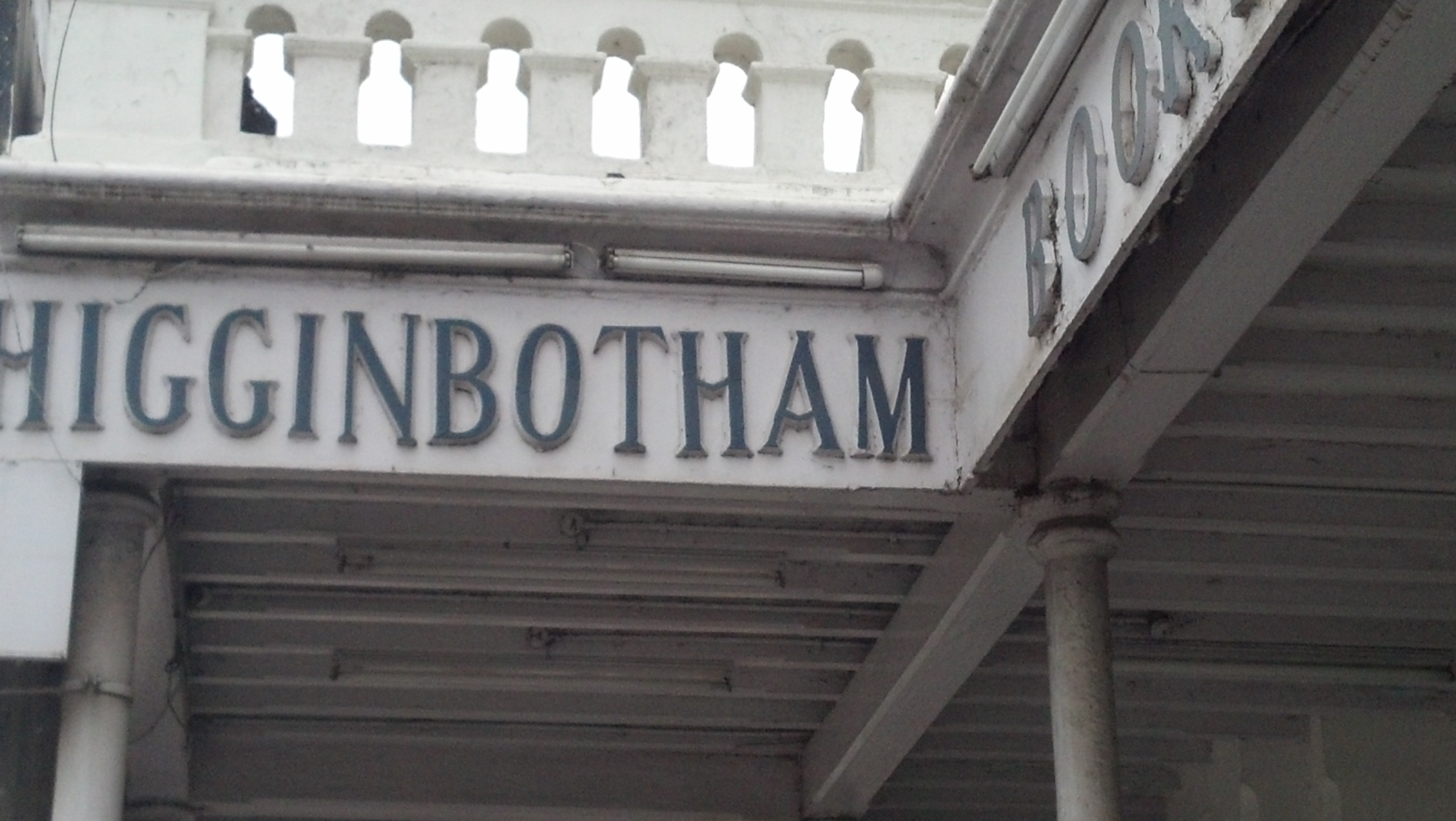
Higginbotham’s, reputedly India’s oldest extant bookstore, was established in 1844 by Abel Joshua Higginbotham. Despite the fact that the establishment looks a little the worse for wear–both inside and out–I made some good book discoveries. (If you don’t have time to read the whole post, skip to the end–I saved the best for last.)
Posted in books, bookstores, Chennai, South India, Travel
Tagged books, bookstores, Chennai, Higginbotham's, Indian authors, Kalam, South India, Tamil Nadu, TATA, Travel
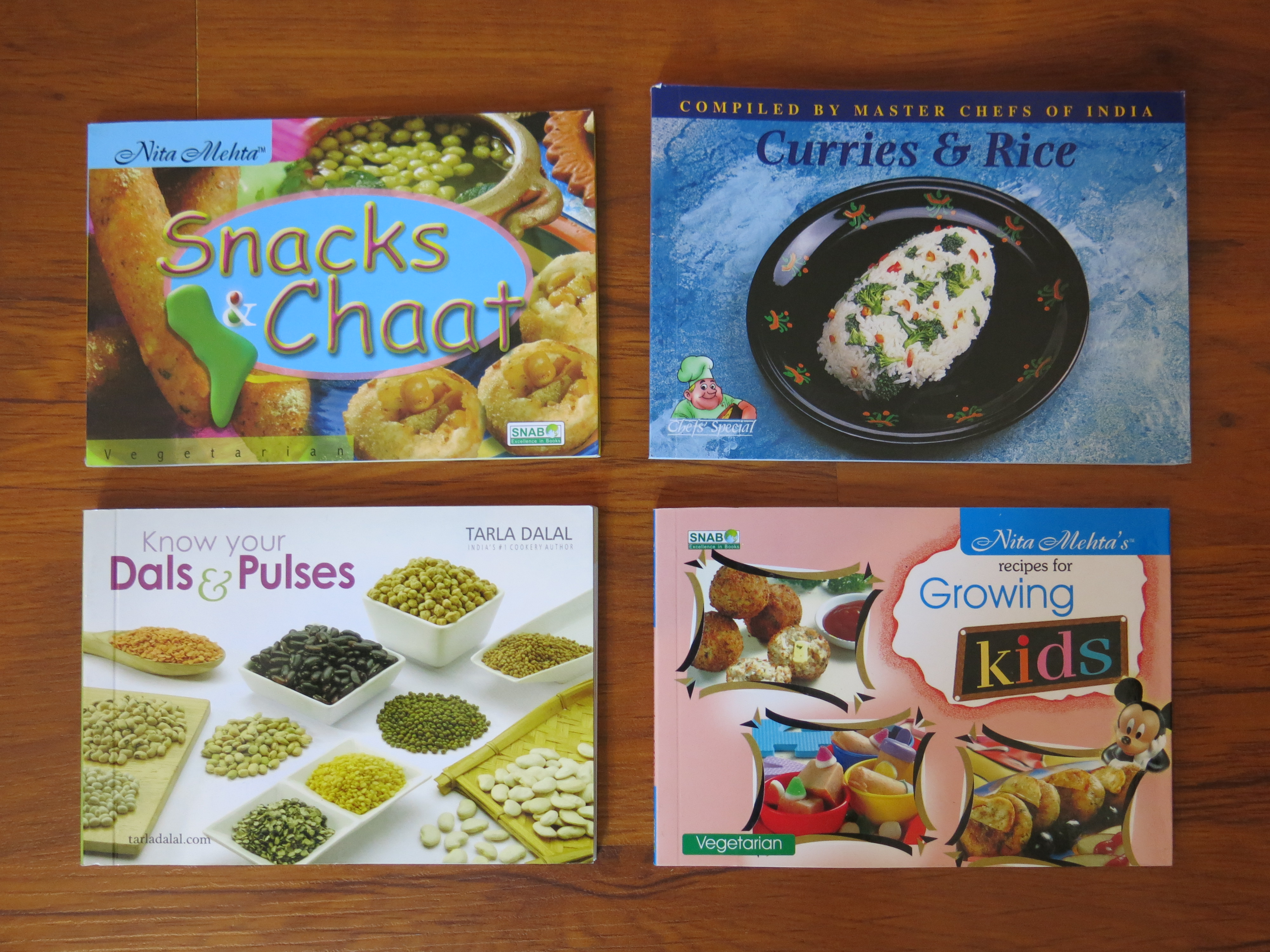
We’ve enjoyed Indian food so much that I wanted to take some cookbooks back with me, both to use myself and to share with friends. However, a couple of hardcover cookbooks with glossy pages and color photos can really weigh down one’s luggage. So I was delighted to find a collection of pocket-sized cookbooks at the Phoenix Mall Starmark last week. They feature full color illustrations (so you know what you’re making), measurements in American quantities, and a variety of recipes ranging from simple snacks to complex entrees.
Posted in Chennai, food, South India, Travel
Tagged books, Chennai, cookbooks, cooking, dal, dosa, food, South India, Tamil Nadu, Travel
The wall of the Vasanta Bhavan restaurant in the Phoenix Mall caught my attention soon after our arrival in Chennai:
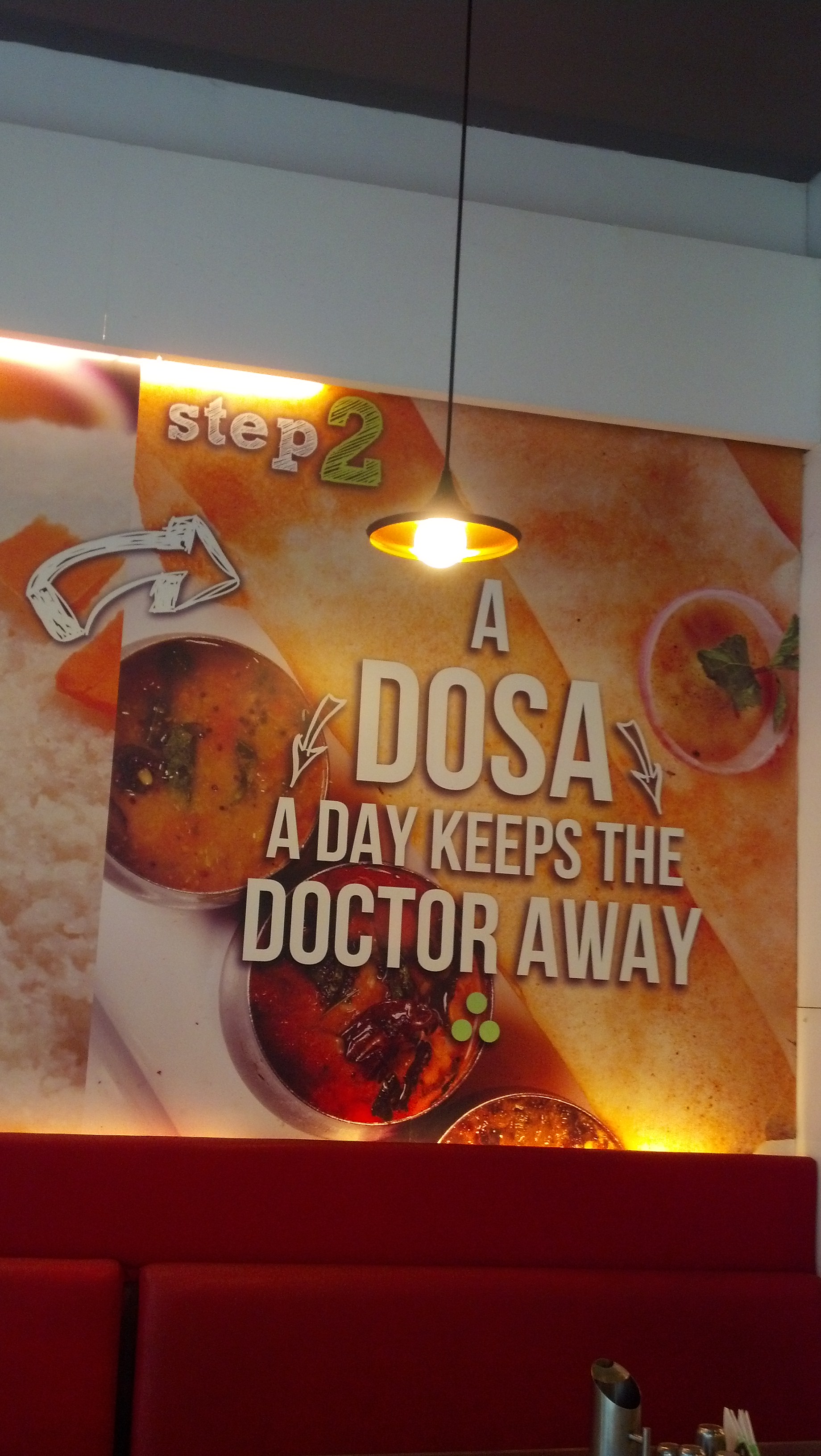
Recently I began to take this advice to heart. We can get these crisp, satisfying crepe-like creations fresh from the griddle at the Radisson Blu Hotel breakfast buffet. As previously mentioned in Food, Glorious Food, dosas are generally eaten with a side of sambhar and three chutneys: coconut, cilantro, and tomato. Continue reading
Posted in Chennai, food, India, Tamil Nadu, Travel
Tagged Chennai, cooking, dosa, food, India, restaurants, South Asia, Tamil Nadu, Travel

 Linguist List

 Birds' Words